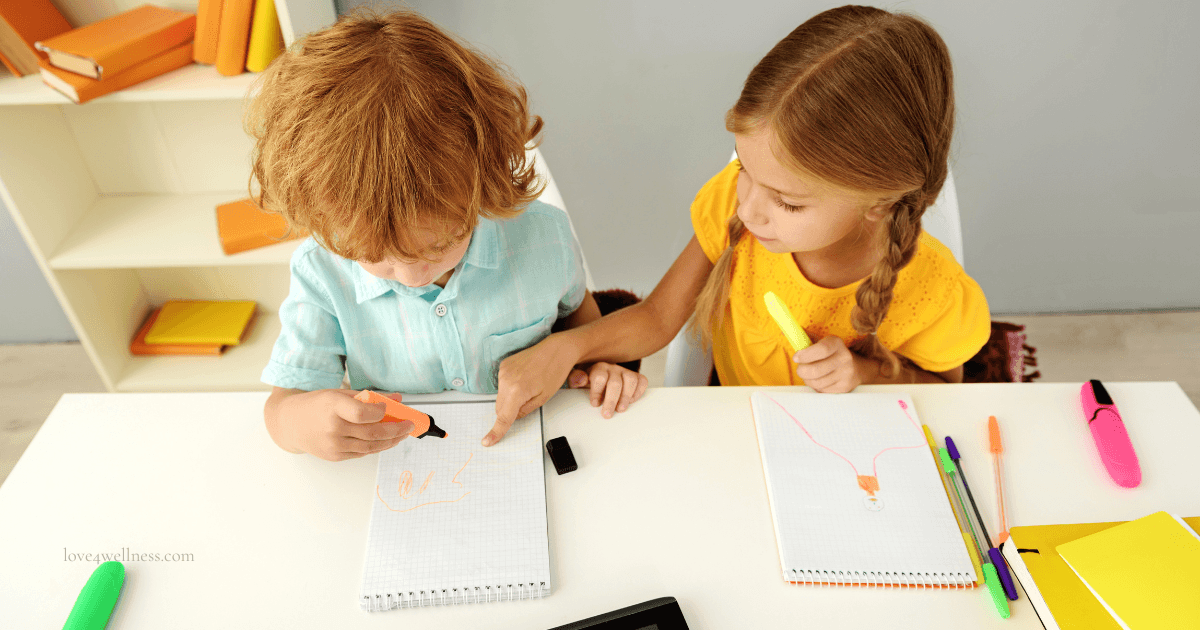
The picture most of us start with
Ask most Indian parents what raising an intelligent child looks like, and a familiar picture forms almost at once: top marks in maths, a confident grasp of physics, perhaps a state rank in some olympiad. That picture is not wrong, exactly. It is simply far too small. Raising an intelligent child means something broader than producing a strong performer in two subjects, and the gap between those two ideas quietly shapes how a whole generation is brought up. This article is about that gap, and about everything good that fits inside it.
One room in a much larger house
None of what follows asks you to value maths and science any less. Both are magnificent disciplines, and a child who loves them deserves every encouragement. The argument is narrower and, I think, more useful. Logical and numerical ability is one room in a much larger house, and a child locked inside that single room — however well furnished — grows up with capacities left unopened. Curiosity, empathy, judgement, creativity, the ability to read a room or recover from a setback: these are not soft extras layered on top of “real” intelligence. They are intelligences, in forms our marksheets were never built to measure.
The question worth sitting with
So the question worth sitting with is not whether your child is clever at sums. It is what kind of mind, and what kind of person, all that cleverness is being attached to. Let us walk through what the science actually says, what gets lost when we forget it, and — most practically — what a parent can do at the kitchen table to widen the picture.
What we mean when we say “intelligent”
How a single number took over
For most of the twentieth century, intelligence had a number. The IQ test, born in early-1900s France to flag schoolchildren who needed extra help, hardened over decades into something it was never meant to be: a single score that supposedly captured how clever a person was, full stop. The appeal is obvious. A number feels objective, rankable, and fair. It lets a school, an employer, or an anxious parent quickly sort children. Yet that very neatness is the problem, because human ability refuses to sit still inside one figure.
What the test quietly leaves out
Consider how much an IQ test leaves untouched. It measures certain kinds of reasoning, mostly logical, spatial, and verbal, and it measures them well. But it says almost nothing about whether a child can calm a frightened friend, sense when a joke has gone too far, invent a story that holds a room, or keep going after a bad failure. We all know adults who scored brilliantly on every exam and yet make a mess of their relationships, their decisions, their working lives. We know others of modest academic record who navigate people and problems with a sureness that looks a lot like genius. If a measure of intelligence cannot account for either case, the measure is incomplete.
Gardner and the many forms of mind
The psychologist who pushed hardest against the single-number view was Howard Gardner of Harvard. In his 1983 book Frames of Mind, he argued that intelligence is not one monolithic capacity but a set of distinct, relatively independent abilities. He initially named seven, later adding more: linguistic, logical-mathematical, spatial, musical, bodily-kinaesthetic, interpersonal (understanding others), and intrapersonal (understanding oneself). His point was not that some children are clever and others are not. It was that the question worth asking is not how smart a child is, but how a child is smart.
Three children, one row, three intelligences
Picture three children in the same Class 8 row. One solves quadratic equations effortlessly but freezes in front of an audience. The second struggles with algebra, yet choreographs the school dance and senses, before anyone else, when a classmate is upset. The third forgets formulae but takes a broken radio apart and coaxes it back to life. A marksheet ranks them in a tidy line, top to bottom. Gardner’s framework rejects that line, because each child carries a different and genuine form of intelligence. The error is not in noticing that the first child is strong at maths. The error lies in concluding that the first child is therefore the most intelligent and that the others are somehow less intelligent.
An honest word about raising an intelligent child
It is worth noting that Gardner’s theory has its academic critics, who argue that his “intelligences” might be better described as talents or aptitudes, and that the categories are hard to measure cleanly. That debate is real and ongoing. Yet even his sharpest critics rarely defend the old idea that one number can sum up a mind. The direction of travel, across psychology and education alike, runs firmly away from the single score and towards a fuller, more pluralistic picture of what a capable human being looks like.
Also Read: Why Is Learning A New Language Good For Your Brain?
The intelligence that lives in feeling
What emotional intelligence actually means
If Gardner widened the frame, the psychologist Daniel Goleman aimed a spotlight at one corner of it that parents ignore at their peril. His 1995 book Emotional Intelligence popularised a phrase now worn smooth by overuse, but the underlying idea remains sharp. Goleman defined emotional intelligence as the capacity to recognise and manage one’s own emotions, to motivate oneself, to read others’ emotions, and to handle relationships skilfully. These are not personality frills. They are abilities, and like most abilities, they can be taught and strengthened. EQ is an important aspect to consider when raising an intelligent child.
The claim, and a fair caveat
Goleman’s bolder claim, the one that made the book a phenomenon, was about consequences. He argued that IQ accounts for only around twenty per cent of life success, with emotional and social factors weighing heavily in the rest. Now, that specific figure deserves a careful caveat: it has been challenged by researchers who find the “EQ beats IQ” formulation too neat, and Goleman himself later framed the relationship more subtly. The fairer statement, which even his critics tend to accept, is that beyond a certain threshold of cognitive ability, emotional skills become the factor that increasingly distinguishes who thrives. Once a roomful of people all clear the intellectual bar for a job, what separates them is rarely who is cleverest. It is who listens, who stays steady under pressure, who can disagree without wounding.
Why this lands at your kitchen table
Translate that into a parent’s daily reality, and it stops being abstract. A teenager who cannot name what she is feeling tends to act it out instead — in slammed doors, in sulks, in exam-hall panic that has nothing to do with how well she knows the material. A child who never learns to wait, to sit with a small frustration, struggles later with the long, dull stretches that every worthwhile goal demands. Meanwhile, the young person who can soothe his own nerves, sense a friend’s unspoken hurt, and stay calm when a plan collapses has an advantage that no coaching class can sell. These capacities show up nowhere on a marksheet, yet they govern whether all that academic strength ever gets put to good use.
The Indian habit of hiding feelings
There is a distinctly Indian dimension here that deserves naming. In many households, a boy in particular is raised to suppress feelings rather than understand them, on the old theory that emotional restraint signals strength. Anger gets a pass; sadness and fear do not. A child schooled in that pattern may top every test and still arrive at adulthood unable to ask for help, name a worry, or admit a mistake. We have, as a culture, sometimes treated emotional fluency as the opposite of seriousness. The evidence suggests it is closer to a foundation for it.
Creativity is not the enemy of rigour
The false seesaw
A second casualty of the maths-and-science fixation is creativity, and the loss runs deeper than missed art classes. Somewhere along the way, many of us absorbed a false split: that logic and imagination sit at opposite ends of a seesaw, so that a child strong in one must be weak in the other. The history of science demolishes this idea. The leaps that reshaped physics, mathematics, and medicine came not from rote computation but from imaginative jumps — a willingness to picture what was not yet proven, to ask the odd question, to see a pattern nobody had named. Rigour and imagination are not rivals. The best thinkers run on both, and therefore, creativity should never be overlooked while trying to raise an intelligent child.
How exams train imagination out
The trouble is that schooling, and especially exam-driven schooling, tends to reward only one. A child who can reproduce the expected answer scores well; a child who proposes an unexpected one risks losing marks for being “wrong”. Repeat that lesson for a decade, and the message lands: there is one correct response, your job is to find and return it, and wandering off the path is dangerous. By the time such a student reaches a university or a workplace that suddenly demands original thinking, the muscle has wasted from disuse. Creativity was never absent. It was trained out.
Reading the early signs correctly
This matters for parents because the early signs of creative intelligence are easy to misread as a nuisance. The child who keeps asking “but why”, who builds strange contraptions, who tells elaborate untrue stories, who would rather invent a game than follow the rulebook — that child is exercising exactly the faculty the modern world prizes most and our exams measure least. Treated as a disruption, it shrinks. Treated as a strength to be shaped, it grows into the capacity to solve problems no textbook anticipated. The aim is not to choose creativity over discipline, but to refuse the false choice and cultivate both in the same child.
What the policy says, and what it cannot do
Indian classrooms are not blind to this, at least on paper. The country’s National Education Policy 2020 explicitly calls for a shift away from rote memorisation towards conceptual understanding, critical thinking, and creativity. The policy speaks of dissolving the rigid walls between arts and sciences and nurturing higher-order skills alongside academic content. Whether that vision survives contact with crowded classrooms and entrenched exam habits is an open question, and one parents cannot afford to wait on. The reform sets a direction; the daily work of broadening a child’s mind still largely takes place at home.
Also Read: Movement as Medicine: Why PE Class Is Not a Waste of Time
The intelligence that knows what to do
A cleverness no syllabus teaches
There is a kind of cleverness that never appears in any syllabus, and the psychologist Robert Sternberg gave it a name. His triarchic theory describes three intelligences working together — analytical, creative, and practical intelligence, the capacity to apply skills and knowledge effectively in real-world situations. It is the difference between a student who can recite the theory of a thing and one who can actually do it; between the person who knows what is right in principle and the person who senses what will work in this particular room, with these particular people. We sometimes call it common sense or “street smarts”, as though it were a lesser thing. It is not.
The relative we all recognise
Indian families recognise this instinctively, even when our schooling forgets it. We have all met the relative with no grand degree who reads people flawlessly, drives a hard bargain, and steers a family through crisis with a steadiness the gold-medallist cousin cannot manage. We have all watched a brilliant student leave home for a hostel and discover, with a shock, that knowing thermodynamics does not tell you how to budget, cook, resolve a quarrel with a roommate, or judge whom to trust. Practical intelligence is what fills that gap, and it grows only through being allowed to handle real responsibility — something an over-scheduled, over-protected childhood quietly prevents.
The engine and the driver
This is perhaps the sharpest cost of organising a young life entirely around marks. When every waking hour goes to tuition and revision, a teenager never gets the messy, low-stakes practice that builds judgement: managing a little money, settling a disagreement without an adult refereeing, planning something and watching it go wrong. We hand such children a powerful engine and never teach them to drive. Then we are surprised, years later, when academic success fails to translate into a life that works. The translation was never automatic. It depended on a kind of intelligence we forgot to nurture.
What the narrow path actually costs
A price paid slowly
It helps to be concrete about the price of the squeeze, since it is rarely paid in full at once. It accumulates quietly, in ways that look like success right up until they don’t. A child can sail through fifteen years of schooling as a star and arrive at adulthood strangely unequipped — fluent in calculus, lost in conversation; able to optimise an equation, unable to weather a disappointment. The marksheet recorded a triumph. The fuller account tells a more complicated story.
The emotional toll, and the missing shock absorbers
The emotional toll is the most visible, and India has been forced to confront it. The intense pressure on students channelled into a single academic track has been linked, in town after town, to anxiety, burnout, and worse. When a child’s entire sense of worth is pinned to performance in a couple of subjects, every dip in marks becomes an identity crisis rather than a setback. A young person with a wider sense of who they are — an artist, a kind friend, a quick problem-solver, a steady presence — has more to stand on when one pillar wobbles. Narrowing the definition of intelligence does not just limit a child’s skills; it also limits a child’s potential. It removes the emotional shock absorbers that a hard adolescence requires.
Training for the jobs machines do best
Then there is the cost to the future that these children will work in. The economy they are entering increasingly automates exactly the routine, rule-following tasks that our exams reward, while placing a premium on the things our exams ignore: creativity, collaboration, emotional skill, and the judgment to handle the unfamiliar. We risk training a generation to excel at precisely the work machines now do best, while leaving underdeveloped the human capacities that no machine can replicate. A definition of intelligence built for the examination hall of 1985 is a poor preparation for the world of 2045. The mismatch is not the child’s fault. It is ours for measuring the wrong things and calling it intelligence.
Widening the picture, at home
The good news about where to start
The encouraging news is that the capacities marks overlook are precisely the ones a parent is best placed to nurture, and most of the nurturing costs nothing but attention. None of what follows requires a new class, a gadget, or a fee. It requires a small shift in what you notice, praise, and make room for. Here, in plain terms, is where to begin.
Change the question you ask
Start by changing what you ask about. The reflexive question — “How much did you get?” — quietly teaches a child that the number is the point. Try trading it, at least sometimes, for questions that prize thinking over scoring: What was the most interesting thing you learned today? What did you get wrong, and what did you work out from it? What would you have done differently? These ask a child to reflect, value the process, and treat a mistake as information rather than as shame. Over months, that single change reshapes how a young person relates to their own mind.
Guard empty time
Next, protect unstructured time as fiercely as you protect study time. Boredom, far from being wasted, is the soil in which creativity grows. A child with an empty afternoon and no screen will, eventually, invent something — a game, a story, a project, a question. Every hour spent on another tuition is an hour when imagination and self-direction do not get to develop. You are not being a lax parent by leaving gaps in the schedule. You are leaving room for the faculties that no schedule can teach.
Hand over real responsibility
Hand over real responsibility, sized to age, and resist the urge to rescue. Let a younger child manage a small allowance and feel the consequence of spending it badly. Let a teenager plan a family outing, settle a dispute with a sibling without your verdict, cook a meal, or make a decision and live with how it turns out. These ordinary tasks build the practical intelligence and emotional steadiness that no worksheet supplies. The discomfort of watching a child fumble something is real; it is also the exact moment the learning happens. A parent who smooths every path raises a clever child who cannot walk one alone.
Take feelings as seriously as facts
Take feelings as seriously as facts. When a child is upset, the instinct to fix or dismiss — “don’t cry”, “it’s nothing”, “just focus on your studies” — teaches them that emotions are problems to suppress. Naming the feeling instead (“that sounds frustrating”, “you seem nervous about tomorrow”) builds the emotional vocabulary that self-regulation depends on. This is not indulgence; it is instruction. A child who can name what they feel is a child learning to manage it, and that skill will outlast every formula they memorise.
Widen what your home admires
Finally, widen what your household visibly admires. Children read what we celebrate far more accurately than what we say. If only ranks and marks earn the warm tone and the proud phone call to relatives, a child learns exactly which part of themselves counts. Notice and name the other things aloud: the kindness shown to a struggling friend, the clever fix for a household problem, the courage to try something they might fail at, the persistence after a setback. You are not lowering your standards by doing this. You are telling your child the truth — that intelligence wears many faces, and you can see all of them.
A bigger definition, a steadier child
Back to that tidy picture
Let us return to where we began, to that small and tidy picture of the child raised to be intelligent, the one with the best marks in maths and science. By now, its limits should be plain. That child may indeed be brilliant. But brilliance in two subjects is a fact about two subjects, not a verdict on a whole mind, and certainly not on a whole person. Raising an intelligent child, properly understood, means tending to all the forms intelligence takes — the logical and the emotional, the creative and the practical, the gift for numbers and the gift for people.
Why is this not anti-achievement
This is not an argument against achievement. A child who is emotionally steady, curious, creative, and practically capable will, if anything, do better at maths and science too, because they will bring resilience to the hard days, imagination to the hard problems, and self-knowledge to the long haul. The wider capacities do not compete with academic ones. They support them, the way deep roots hold up a tall tree. The parent who nurtures the whole child is not sacrificing marks. They are building the foundation that makes high marks sustainable rather than brittle.
The part that lasts
The deepest reason to widen the picture, though, has nothing to do with performance. It is that your child is a complete human being, not a candidate, and the years of childhood are the one window in which their full range of capacities can be opened or left shut. The marks will matter for a while and then, quietly, matter much less. What will not fade is whether your child grew into someone who can think for themselves, feel deeply, create freely, recover from hardship, and move through the world with both competence and kindness. That is what a raising a truly intelligent child looks like. It always was. We simply forgot to measure it — and the good news is that the measuring never counted.
