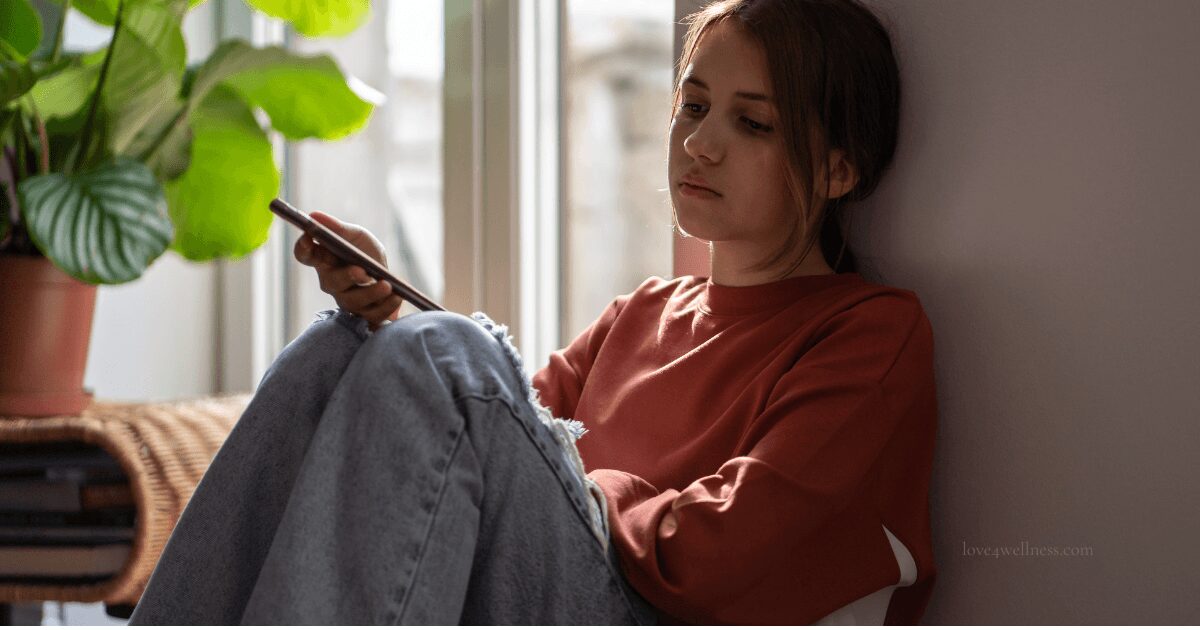
Nobody wakes up one morning and decides to be anxious. Least of all a child. Anxiety in students does not arrive with a warning — it seeps in quietly, through the cumulative weight of expectations, comparisons, exhaustion, and a world that has grown genuinely harder to navigate. By the time a parent or teacher notices something is wrong, the child has often been carrying it alone for a long time.
This article does not offer easy answers. What it offers is something more useful: an honest, human look at every reason your child might be struggling — from the large and obvious to the small and overlooked — and a grounded set of ideas for what parents and educators can actually do about it.
The Weight of Academic Pressure
Start here, because this is where most children start, too.
In India, the relationship between education and worth has been tied together so tightly for so long that many families no longer notice the knot. A child’s marks are not just marks. They are, in the minds of many parents, teachers, and children themselves, a measure of intelligence, character, and future. The pressure this creates is enormous — and it begins far earlier than most adults realise.
A cross-sectional survey of over 860 school students in Manipur found that all participants reported moderate to high academic stress, and a majority experienced mild to severe depressive symptoms. Not some students. All of them. A review of 52 studies across diverse countries found that the majority demonstrated a strong connection between academic pressure and anxiety, depression, and in some cases, suicidal ideation. Anxiety in students intensifies sharply in the final years of schooling, with around one in six students experiencing excessive distress. In India, where competitive entrance examinations for engineering and medical colleges define the aspirations of millions of families, that number almost certainly runs higher.
Ravi is 16 and lives in Bengaluru. He studies from 6am, attends school, attends three hours of coaching, comes home, eats, and studies again until midnight. While he has been doing this for 2 years, he never complains. He is quiet, polite, and getting thinner. His parents say he is focused. His body says something different entirely.
The tragedy is not just the pressure itself. It is that many children internalise this pressure as their own — as something that originates inside them, as a personal failing when it becomes unbearable. Anxiety in students thrives precisely in that gap between expectation and self.
The Comparison Trap — Inside and Outside the Classroom
Peer comparison has always been part of school life. What has changed is its relentlessness and its reach.
In the classroom, the tradition of announcing ranks, reading scores aloud, and celebrating toppers while quietly sidelining everyone else teaches children something powerful and damaging: that their value is relative. That being good is not enough — you must be better than someone else. Research on academic stress in Indian schools consistently identifies perceived parental pressure and peer comparison as two of the strongest predictors of anxiety in students. These two forces do not work in isolation. They amplify each other.
Outside the classroom, social media has extended this comparison into every waking hour. A study of Indian adolescents found that a high percentage felt pressure to maintain an image on social media, experiencing anxiety about social perception and acceptance. Research linking social media use to anxiety in adolescents found that anxious young people are more likely to engage in social comparison — and that social media’s visual, status-driven nature makes this comparison particularly corrosive. Girls, as Harvard research on Indian adolescents notes, are particularly vulnerable to these effects.
What does this look like in practice? It looks like a 13-year-old girl who checks her friend’s Instagram at 11pm and feels, in the space of three scrolls, inadequate about her appearance, her grades, and her social standing. It looks like a boy who refuses to admit he scored lower than his friend on a test and starts avoiding conversations about school altogether. Anxiety in students feeds on comparison — and the modern world has made comparison inescapable.
Diet: The Invisible Trigger No One Talks About
Here is something that surprises most parents: what a child eats plays a direct role in how anxious they feel.
The gut and the brain communicate constantly through the gut-brain axis. And the gut produces up to 95% of the body’s serotonin, the neurotransmitter most closely linked to emotional stability. When a child’s diet is high in ultra-processed food, refined sugar, and artificial additives, the gut microbiome becomes disrupted. Serotonin production falters. The brain loses one of its most important steadying mechanisms. Anxiety in students, in part, has a nutritional dimension that rarely enters the conversation.
A child who skips breakfast and subsists on biscuits, packaged juice, and instant noodles through the school day is not simply eating poorly. They are, without knowing it, making their nervous system more reactive, their mood more volatile, and their capacity for calm, focused thought measurably weaker. The link between nutrition and child mental health is discussed in detail in our earlier article on food and brain development — but its relevance here is direct and important. Diet is not a luxury issue. It is a mental health issue.
Physical Inactivity: The Missing Release Valve
The body stores stress. Movement releases it.
When a child runs, plays, or engages in any sustained physical activity, the brain releases endorphins, serotonin, and dopamine — the very neurochemicals that regulate mood and reduce anxiety. A meta-analysis published in BMC Public Health found that physical activity interventions in children effectively reduce anxiety, depression, and stress. The most notable improvements appeared in stress reduction, specifically.
Yet across India, PE periods shrink as examinations loom. Recess gets shortened. After-school hours are filled with tuition. Children who need movement most — the anxious, the overloaded, the overwhelmed — are the ones most systematically denied it. The irony is significant. Schools remove the very intervention that would make their students calmer and more capable of learning, in the name of creating more learning time. Anxiety in students rises, in part, because the release valve has been sealed shut.
Also Read: Movement as Medicine: Why PE Class Is Not a Waste of Time
Screens, Sleep, and the Always-On Generation
Today’s school-going children inhabit a world their parents did not grow up in — and the implications for anxiety are real.
Screens keep children connected, stimulated, and entertained for every hour of the day. Research linking social media use to anxiety found that time spent on social media correlates more strongly with depressive symptoms, low self-esteem, and self-harm behaviour than time spent on television or gaming. The passive consumption of other people’s curated lives — their achievements, friendships, appearances — creates a constant, low-grade sense of inadequacy with no off switch.
Then there is sleep. Screens disrupt the melatonin cycle, delay sleep onset, and reduce sleep quality. A sleep-deprived child is a child whose prefrontal cortex — the part of the brain responsible for rational thought, impulse control, and emotional regulation — is running on severely reduced capacity. Anxiety in students who sleep poorly is not surprising. It is physiologically predictable. The child who scrolls until midnight and then cannot understand why they feel fragile and overwhelmed the next day is not weak. Their brains are simply not resourced to cope.
Also Read: Sleep Is Not Laziness: Why Your Teen Needs More of It
The Home Environment: What Children Absorb Without Words
Children are extraordinarily sensitive to the emotional atmosphere of their homes. They pick up what is unspoken. They mirror what they see.
A four-wave longitudinal study found that parental anxiety significantly predicted child anxiety across all time points. Meaning that a parent’s unresolved anxiety does not stay contained within the parent. It transmits. Research on parental anxiety and child development found that anxious parents transfer their own anxieties through modelling, through the subtle messaging they communicate about safety and risk, and through parenting behaviours that reinforce rather than reduce a child’s fear.
This is not about blame. Parental anxiety is real, understandable, and often a product of genuine hardship. A parent who grew up in economic uncertainty carries that history with them. A parent navigating pressure from their own family to ensure their child’s academic success is managing multiple systems at once. The point is not that parents cause anxiety in students — it is that the emotional climate of a home shapes a child’s internal world in ways that are both profound and, thankfully, changeable.
When a parent responds to a poor exam result with panic or disappointment rather than curiosity and steadiness, the child learns that poor results are catastrophic. When a parent voices their own worries aloud — about money, about the future, about what others will think — the child absorbs those worries as their own. The home is not simply a backdrop to a child’s life. It is the first and most formative environment in which anxiety either takes root or does not.
Society’s Narrowing Definition of Success
Step back further, and a broader picture comes into focus.
India is a country that has, for generations, channelled a large proportion of its parental aspirations into two professions: engineering and medicine. The IIT dream, the NEET journey, the JEE preparation that begins in Class 8 — these are not simply educational choices. They are cultural phenomena, shaped by decades of post-independence belief that a particular kind of professional success equals a particular kind of safety. Research on academic stress and entrance exam anxiety in Indian adolescents documents the psychological cost of this narrowing clearly. Students who feel their entire future rests on a single examination carry a weight that is genuinely disproportionate.
The world has changed. The pathways to a good life have multiplied. And yet the cultural script in many families has not kept pace. Children who might flourish as designers, writers, athletes, entrepreneurs, or artists instead receive the message — sometimes explicit, sometimes unspoken — that those paths are for people who could not make it elsewhere. Anxiety in students, in this context, is not just a medical condition. It is a rational response to an impossible set of expectations with no apparent way out.
The Trivial Triggers That Are Never Trivial
And then there are the smaller things. The ones adults wave away. The ones children carry in silence.
Being picked last for a team. Mispronouncing a word in class and hearing the laughter. Sending a message in a group chat and receiving no reply. Arriving at school and finding that your friends have made plans without you. Forgetting your homework. Being called on by a teacher when you do not know the answer. Wearing the wrong kind of shoes on a day when everyone notices.
These moments feel trivial from the outside. From the inside, a child whose social world is their entire world, whose sense of belonging is still being formed, whose brain is still learning to regulate emotion, can be devastating. Research on childhood anxiety consistently notes that anxiety in students is often dismissed or missed precisely because its triggers look small to adults. But anxiety does not need a large trigger. It needs an accumulation of small ones, experienced by a brain that does not yet have the architecture to process them all.
These are the moments that pile up. That became a stomachache before school. The tears that appear from nowhere. The child who is suddenly, inexplicably, not themselves.
How Anxiety Shows Up: What to Watch For
Anxiety rarely announces itself clearly. It disguises itself as behaviour, as physical complaint, as personality.
In younger children, anxiety often appears as physical symptoms. Recurring stomachaches and headaches, especially before school; difficulty sleeping; clinginess; tearfulness over small things; avoidance of activities they previously enjoyed. A child who suddenly does not want to go to school and who develops an inexplicable but consistent stomachache every Monday morning is telling you something real.
In older children and teenagers, anxiety often looks different. Irritability, withdrawal, negative self-talk (“I’m so stupid,” “no one likes me”), difficulty concentrating, changes in eating and sleeping habits, and a creeping avoidance of anything that might lead to failure. An adolescent who stops trying — who opts out of activities they once loved, who becomes cynical about school, who seems apathetic rather than distressed — may not be lazy. They may be managing anxiety in the only way they currently know: by making themselves smaller.
The Child Mind Institute notes that anxious children often go undetected precisely because many of them are quiet, eager to please, and outwardly compliant. They are the last students anyone worries about — and sometimes the ones who need the most support.
Also Read: Anxiety Basics Explained – Reasons, Symptoms, Vulnerable Groups, & How To Avoid
What Parents and Educators Can Do
There are no perfect answers here. But there are real ones.
For parents
The most important shift is one of language and framing. A child who hears “What did you score?” after every test receives a message about what matters. A child who hears “how was your day — what was interesting?” receives a different message entirely. Academic results matter — of course they do — but they are not the sum of a child. Communicating this genuinely, consistently, and especially in moments of failure, builds the psychological safety that is the single greatest protective factor against anxiety in students.
Managing your own anxiety is equally important. Children absorb the emotional temperature of the adults around them. A parent who visibly catastrophises about results, who talks about exams as life-or-death events, who cannot sit with uncertainty, teaches their child to do the same. This is not a criticism. It is an invitation to get support for yourself alongside your child.
For educators
The evidence is clear. Schools that reduce competitive ranking structures, that celebrate diverse kinds of achievement, that build emotional literacy into the curriculum, and that train teachers to identify the signs of anxiety in students — these schools produce measurably healthier, and ultimately more capable, young people. A teacher who notices a quiet, withdrawn child and asks a genuine question is sometimes the first adult that child has felt seen by. That moment costs nothing. Its impact can be lasting.
Practically, both parents and educators can prioritise sleep, nutrition, and physical activity as mental health interventions — because that is precisely what they are. They can limit social media during vulnerable evening hours. They can create spaces where children are allowed to fail without consequence, to be uncertain, and not know the answer.
Most of all, they can listen without immediately trying to fix. Anxiety in students often diminishes simply in the presence of an adult who takes it seriously, who does not minimise it, and who communicates — through word and action — that the child’s inner life matters more than their mark sheet.
A Closing Thought
Your child’s anxiety is not a character flaw. It is not a parenting failure. Neither is it a sign of weakness or dysfunction. It is a signal — one of the most honest signals a child can send — that something in their world has become more than they can carry alone.
The question is not whether to take it seriously. The question is simply: are we listening?
Every anxious child is asking to be heard. The most important thing any parent or teacher can do is to stop long enough to actually hear them.
