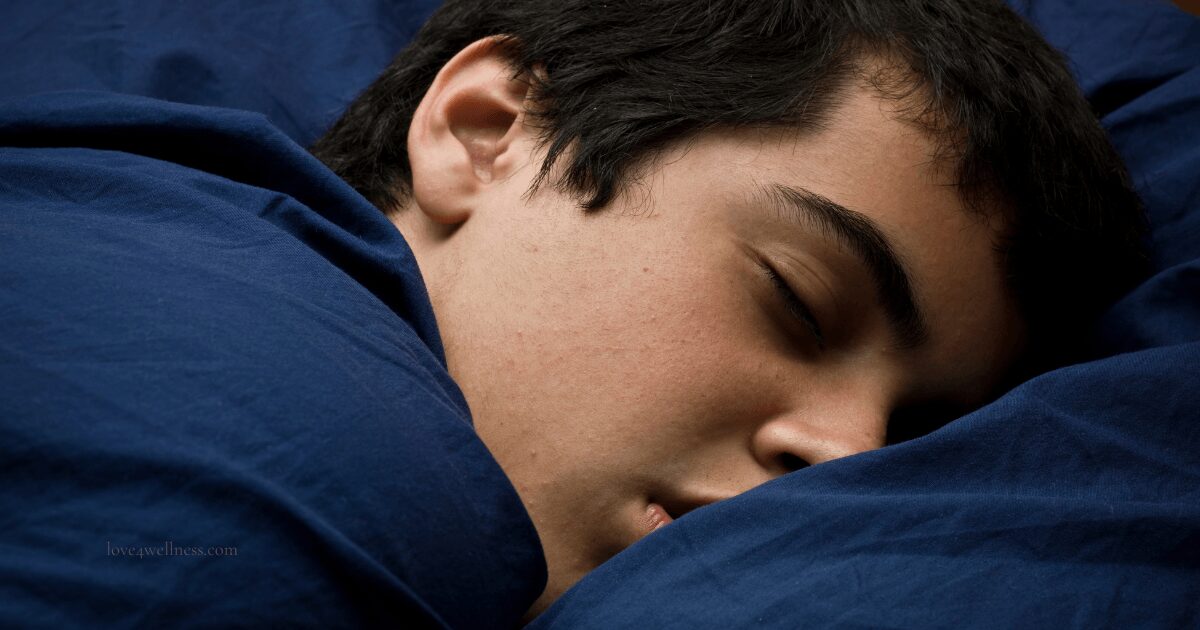
Your teenager could sleep through an earthquake. You have to shake them awake three times every morning. They fall asleep on the sofa at 6 PM on a Sunday — but somehow stay wide-eyed past midnight. And the moment you say something about it, you get the eye roll.
Sound familiar? You’re not alone. Parents across India are having this exact standoff every single morning.
So you wonder: Is my child just lazy? Or is something else going on?
Here’s the thing — it’s not laziness. It’s biology. And once you understand what actually happens inside your teenager’s brain during sleep, you’ll never feel the same about cutting those hours short again. Sleep in teenagers isn’t optional downtime. It’s when the real work gets done.
Your Teenager’s Brain Is Working the Night Shift
Most of us picture sleep as the body’s off switch — a passive pause between one busy day and the next. However, that is far from the truth. When your teenager closes their eyes, their brain shifts into a different kind of activity. It sorts, files, repairs, and grows. Essentially, it throws a very productive party — and nobody’s invited except neurons.
Sleep moves through distinct stages — light sleep, deep sleep, and REM (Rapid Eye Movement) sleep — cycling through them roughly four to six times a night. Each stage serves a different purpose, and together, they make your teenager’s brain function the way you want it to.
During deep sleep, the hippocampus — the brain’s memory hub — essentially replays the day’s learning and transfers it to long-term storage in the cortex. Think of it as the brain’s filing system running an overnight backup. Every concept your child studied, every formula they tried to memorise, every new idea they encountered in class — none of it truly sticks without this process.
“Practice does not make perfect. It is practice, followed by a night of sleep, that leads to perfection.”
— Matthew Walker, neuroscientist and author of Why We Sleep
Meanwhile, REM sleep handles something equally important: emotional processing. During this stage, the brain makes sense of feelings, regulates mood, and consolidates more complex, emotionally charged memories. Research from Harvard’s Healthy Sleep division confirms that sleep deprivation cuts the brain’s ability to absorb new information by as much as 40%.
🧠 Fun fact: That 40% drop in learning capacity is, as Walker puts it, “the difference between acing an exam and failing it miserably.”
In short, when your teenager sleeps, they are not wasting time. They are literally learning.
You Might Also Like:
- Why Teenagers Feel Rebellious — And Why That’s Actually Normal
- Brain Foods for Students: What Indian Teenagers Should Eat to Focus, Remember, and Perform Better
- All You Need to Know About Exam Stress in Teens
- When Helping Hurts: The Hidden Cost of Helicopter Parenting
How Much Sleep Do Teenagers Actually Need?
This surprises most parents: teenagers need more sleep than adults, not less.
The American Academy of Sleep Medicine — whose guidelines are endorsed by the American Academy of Paediatrics — recommends that teenagers between the ages of 13 and 18 get 8 to 10 hours of sleep every night. Johns Hopkins paediatrician Dr Michael Crocetti puts it plainly: teens need about 9 to 9.5 hours because their brains are in a second developmental stage of cognitive maturation.
And yet, most Indian teenagers get nowhere near that.
A Delhi-based study involving over 1,500 students aged 12 to 18 found that the prevalence of sleep deprivation rose with age, from around 84% in 11–12 year olds to over 92% in 13–15 year olds. Sleep in teenagers, the data shows, deteriorates steadily as academic pressure mounts. A separate study from Sir Gangaram Hospital and the NHSRC found that one in five Delhi teenagers suffers from clinical sleep deprivation, and that nearly 60% of those surveyed showed symptoms of depression.
These numbers are not abstract. They are sitting in classrooms across India, running on empty.
“But My Child Just Won’t Sleep Early” — Here’s Why
Before you conclude that your teenager is being stubborn, consider this: puberty delays the brain’s release of melatonin — the hormone that signals sleep — by one to three hours. So the teenager who can’t fall asleep at 10 PM isn’t defying you. Their body genuinely isn’t ready.
This biological shift is called a circadian phase delay, and it’s hardwired into adolescent development. It happens across mammalian species. Research from the American Academy of Paediatrics describes it as a form of “permanent jet lag” — teenagers are biologically wired to live in a different time zone than the rest of us.
Sleep scientist Matthew Walker puts it in terms every parent will immediately feel in their bones:
“Asking your teenager to go to bed and fall asleep at 10 PM is the circadian equivalent of asking you, their parent, to go to sleep at 7 or 8 PM. No matter how loud you enunciate the order… the circadian rhythm of a teenager will not be miraculously coaxed into a change.”
And it gets more uncomfortable: waking that same teenager at 7 AM to function “with intellect, grace, and good mood” is, Walker says, the biological equivalent of waking you at 4 or 5 AM. So the next time your child is sullen at breakfast, they’re not being rude. They’re running on the wrong time zone — through no fault of their own.
The irony, of course, is that Indian school timings are often early. Buses arrive at 6:30 AM. Morning tuitions begin before sunrise. The biological clock pushes teenagers to sleep late; the school clock forces them to wake up early. The result is a daily sleep debt that compounds over weeks and months.
Additionally, screens make this worse. Blue light from phones and tablets suppresses melatonin further, essentially convincing the brain it’s still daytime. So an already delayed internal clock gets pushed back even further. By the time your teenager actually feels sleepy, it’s past midnight — and the alarm is set for 6.
What Sleep Deprivation Does to Your Teenager
So what actually happens when sleep in teenagers falls short — consistently, day after day?
The consequences are immediate and cumulative. Cognitively, sleep-deprived teens struggle with focus, recall, and decision-making. A Delhi school study found that sleep-deprived students scored on average 3% lower than their well-rested peers, with nearly 66% reporting difficulty with memory, focus, and concentration. That gap might sound small, but in an exam culture where every mark counts, it can’t be disregarded.
Emotionally, the damage runs deeper. Systematic reviews published in peer-reviewed journals consistently link poor sleep in adolescents to higher rates of anxiety, depression, and stress, as well as social withdrawal and risk-taking behaviour. The teenage brain — still developing its emotional regulation circuits — is particularly vulnerable. Without adequate sleep, those circuits don’t get the nightly maintenance they require.
😴 Did you know? Matthew Walker describes a sleep-deprived brain as resembling a toddler’s emotional volatility. Without sleep, the brain’s rational prefrontal cortex essentially goes offline — leaving the reactive emotional centres in charge. In other words, that dramatic argument about something minor at 7 AM? Partly a sleep problem.
Physically, the impact is just as serious. Research confirms that sleep is when the body releases growth hormones, builds muscle, and repairs tissue. Chronically sleep-deprived teens face higher risks of obesity, high blood pressure, and weakened immunity. And of course, there’s the daily reality many Indian parents overlook: a drowsy teenager is less safe on the road, less emotionally regulated at home, and less capable of sustaining the academic effort you’re investing so much to support.
What Parents Can Actually Do
Understanding the problem is one thing. Solving it — especially with a teenager who doesn’t want to be told when to sleep — is another. Nevertheless, parents do hold more influence than they realise.
Start with the phone. This is the single biggest practical change most families can make. The research is clear: screens should go off at least one hour before bedtime, and ideally, devices should charge outside the bedroom overnight. Rather than framing this as a punishment, frame it as a health decision. Your teenager’s body simply functions better without late-night blue light.
“There’s pretty good evidence that parental help with limit-setting around bedtimes and media is helpful.”
— Dr Mary Carskadon, Professor of Psychiatry at Brown University
Set a consistent sleep-wake schedule. The body’s internal clock thrives on regularity. Research shows that teenagers whose parents set firm bedtimes get more sleep overall and experience less daytime drowsiness. Try to keep wake-up times consistent even on weekends — the temptation to sleep until noon feels restorative, but actually disrupts the rhythm further. (Yes, even on Sundays. Sorry.)
Rethink the evening schedule. In many Indian households, the evening is packed: dinner, homework, tuition calls, revision. As a result, the only “free” time teenagers get is late at night. Consequently, they guard it fiercely — scrolling, chatting, unwinding on their own terms. If you can carve out even 30 minutes of unstructured downtime earlier in the evening, teenagers are far more likely to wind down willingly by 10 PM.
Make mornings easier. Natural morning light helps reset the circadian clock. Encourage your teenager to step outside or sit near a sunny window in the first hour after waking. This simple habit helps shift the biological clock earlier over time, making it easier to fall asleep earlier the following night.
Model the behaviour. Teenagers are exquisitely attuned to hypocrisy. If you’re on your phone at midnight, the message you send about sleep doesn’t land. A family-wide screen curfew — one that applies to parents too — carries far more weight than a rule aimed only at the child. And yes, this one stings a little. But it works.
Have the conversation, not the lecture. Ask your teenager how they feel when they’ve slept well versus when they haven’t. Let them connect the dots between sleep and how they perform in class, their mood, and their energy. When teenagers arrive at a conclusion on their own, they own it. When parents arrive at it for them, they resist it. (Every parent reading this already knows this is true.)
One Final Thought
In India, we have a complicated relationship with rest. We celebrate the child who studies past midnight. We admire the student who “pushed through.” Somewhere along the way, sleeping well became associated with not working hard enough.
Matthew Walker, one of the world’s leading sleep scientists, puts it bluntly: “We have stigmatised sleep with the label of laziness.” And we’ve paid a price for it.
But consider this: sleep in teenagers isn’t a sign of laziness. It’s a sign of a brain that is growing, learning, and becoming. The teenager who sleeps 9 hours and wakes up sharp is not doing less than the one who pushed through on 5. They are, in fact, doing the most important work of adolescence — building a brain that will serve them for the rest of their lives.
The science is settled. Sleep is not the enemy of achievement. It is an achievement.
So the next time your teenager sleeps in on a Sunday, maybe — just maybe — let them.
Enjoyed this article? Share it with a parent who needs to hear it.
