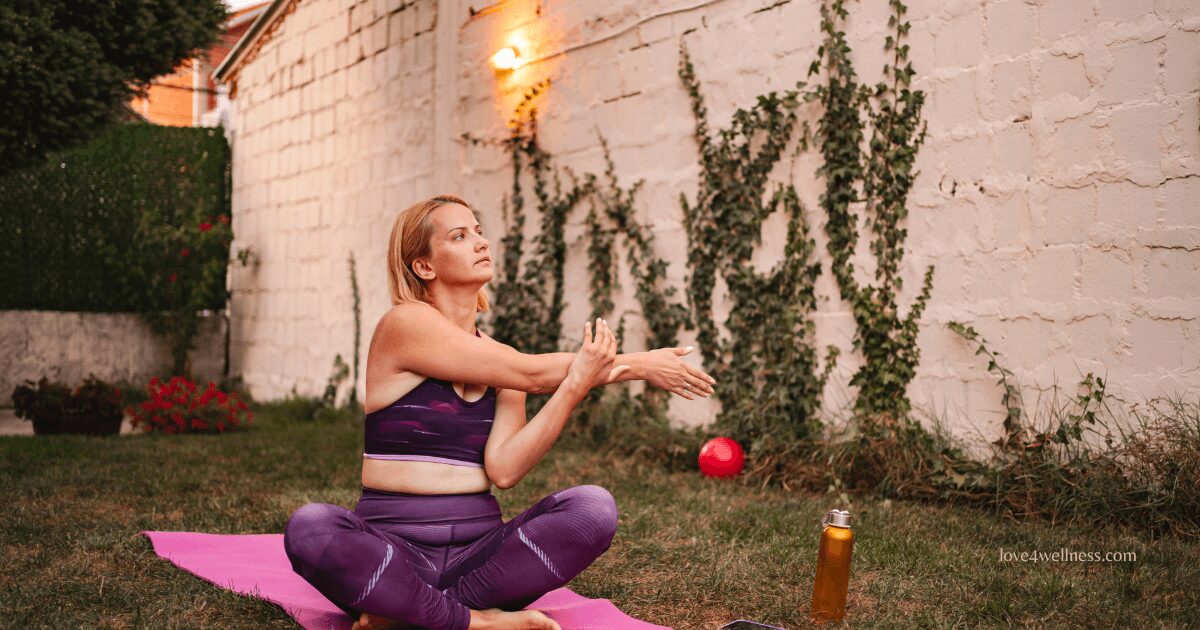
Postpartum blues are real. Postnatal yoga benefits are equally real!
The baby arrives. The visitors come and go, leaving behind a trail of floral wrapping paper and well-wishes. The casseroles pile up in the freezer like a savoury Tetris game.
Then, in the quiet, blurry moments between the 3:00 AM feed and the fourteenth nappy change of the day, you catch a glimpse of yourself in the hallway mirror. You might not even recognise the person looking back. Your hair is in a “strategic” bird’s nest, your shirt has a mysterious damp patch, and your body feels like a house someone else moved into overnight.
Everyone tells you this is “normal.” They say it gets easier, and that you just need to sleep when the baby sleeps (the most impossible advice ever given, right?). But amidst the focus on the little human you’ve created, it’s easy to lose track of the human you are.
The postpartum period—the “fourth trimester”—is a massive transition. It’s not just about healing from birth; it’s about rediscovering yourself. This is where the postnatal yoga benefits truly shine, offering a bridge back to your own body.
What Makes Postnatal Yoga Different?
Postnatal yoga isn’t just “regular yoga, but slower.” It’s a fundamentally different approach designed for a body that has just performed a literal miracle. Think of it as a specialised toolkit for a very specific DIY project: Rebuilding You.
Unlike high-impact gym classes that pressure you to “bounce back” (a phrase we’d love to retire), the postnatal yoga benefits focus on “folding back in.” It acknowledges the reality of your current life:
- The “Motherhood Hunch”: That rounded-shoulder posture we all get from hours of feeding and rocking.
- The Core Connection: Recognising that your abdominal muscles have been stretched to their limit.
- The Pelvic Floor: Giving much-needed love to the muscles that carried the weight of pregnancy.
- The Fog: Addressing the sleep deprivation that makes “left” and “right” feel like advanced calculus.
The Science: What the Research Says
We know it feels good, but what does the data say? Clinical research is finally catching up to what mothers have known for centuries.
1. Mental Health & The “Cloud”
A 2024 systematic review found that yoga-based interventions consistently decreased symptoms of postpartum depression and anxiety. One of the primary postnatal yoga benefits is its ability to regulate the nervous system by stimulating the Vagus Nerve—essentially your body’s internal “reset button” for stress. When you’re breathing deeply on the mat, you’re telling your brain, “We are safe. We can rest.” This is not a pseudoscience anymore – 78% of women in yoga-focused studies show significant clinical improvement in their mood.
2. Physical Recovery & Core Function
Diastasis recti (abdominal separation) affects up to 70% of new moms. It can feel disheartening to see your tummy behave differently than it used to. However, a 2022 study showed that a progressive yoga program significantly reduced this gap. One of the key postnatal yoga benefits is learning to engage the transversus abdominis—your body’s internal corset—without straining yourself.
A Look Inside the Class: What Actually Happens?
If the idea of a yoga class feels intimidating, take a deep breath. Postnatal yoga is the most non-judgmental space on earth. If your baby cries, we pause. Do you need to feed? You feed. If you fall asleep during the final relaxation? That’s a gold star for self-care.
The Physical Reconnection
One of the most immediate postnatal yoga benefits is physical relief. We focus on:
- Releasing the Tension: Gentle neck and shoulder rolls to undo the “nursing neck” ache.
- Functional Strength: Learning how to lift a heavy car seat or a wiggly toddler without throwing out your back.
- Pelvic Health: Moving beyond standard Kegels to functional movements that help you sneeze with confidence again!
The Breath-Body Bridge
New motherhood often leads to shallow, “panic breathing.” By re-learning diaphragmatic breath, you unlock one of the most portable postnatal yoga benefits: the ability to find a moment of calm in the middle of a grocery store meltdown.
“Postnatal yoga isn’t about touching your toes; it’s about checking in with your soul while your body heals.”
Addressing Specific Postpartum Conditions
Postnatal yoga can be a lifeline for common physical hurdles:
- Pelvic Floor Dysfunction: Pregnancy and childbirth place enormous stress on the “hammock” of muscles supporting your organs. Yoga integrates pelvic floor awareness with every movement, helping restore coordination.
- Lower Back and Pelvic Pain: By realigning your posture after months of your centre of gravity shifting forward, you can find relief from that nagging lower back ache.
- Postpartum Anxiety: Regular, structured self-care provides a non-pharmaceutical tool to manage the “what-ifs” of new motherhood. These postnatal yoga benefits extend into your daily life, giving you practical grounding techniques.
When to Begin and How to Progress Safely
Generally, the “magic number” is six weeks for a vaginal birth and 8–12 weeks for a C-section, but always wait for your doctor’s green light.
- Weeks 0-6: Focus on rest and very gentle breath work.
- Weeks 6-12: Foundational practices, core reconnection, and gentle stretches.
- 3-6 Months: Gradually increasing intensity as your energy returns.
Once you get the okay, start slow. The first of the postnatal yoga benefits you’ll likely notice isn’t a flat stomach—it’s the feeling of taking a full, deep breath for the first time in months.
What Postnatal Yoga Cannot (and Should Not) Do
It’s important to stay grounded. Postnatal yoga is a supportive practice, not a magic wand. It won’t instantly “fix” your body or replace medical treatment for severe depression or physical prolapse. However, it will support your body’s natural healing and offer you a community of women who are in the exact same boat.
Making it Work: The “Real Life” Yoga Practice
Let’s be honest: the idea of a serene, hour-long yoga session while a newborn is in the house feels like a fever dream. In reality, your “studio” might be a tiny patch of clear floor between a bouncer and a pile of laundry.
One of the most practical postnatal yoga benefits is its sheer flexibility. You don’t need a 60-minute window of silence. You can find “micro-moments” of movement:
- The “Kettle Stretch”: While the water boils for your tea, take a wide stance and do a gentle side stretch to open those ribs.
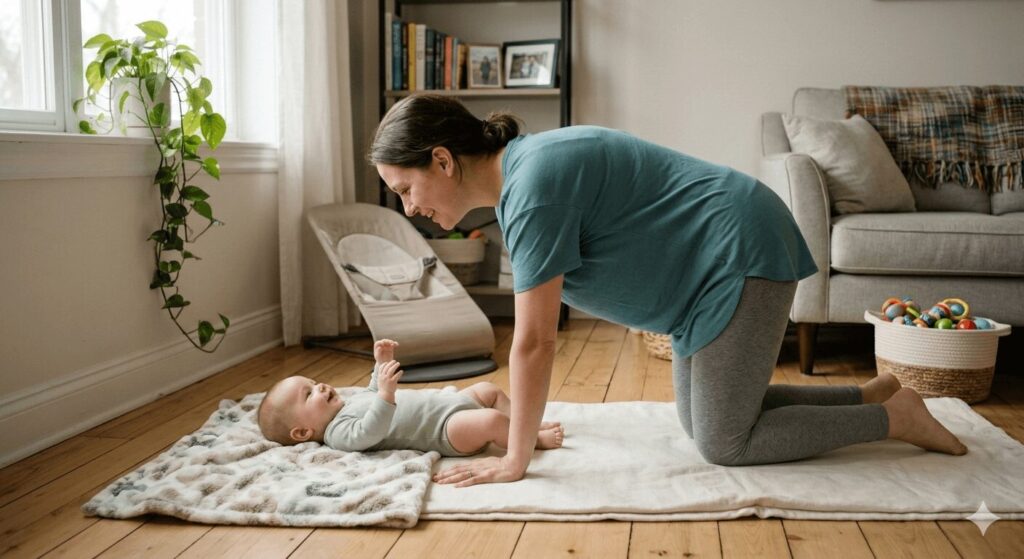
- The “Floor Play” Flow: While your baby is having tummy time, get on all fours and move through a few Cat-Cow stretches. It’s great for your spine, and babies usually find the rhythmic movement fascinating!
- The “Nappy Change” Breath: Every time you lay your baby down for a change, take one conscious, deep belly breath.
The Identity Shift
Motherhood is a beautiful “ego death,” but it can also feel like you’ve lost the person you were before the positive pregnancy test. You might feel a strange grief for your old life, even as you deeply love your new one.
Postnatal yoga serves as a sanctuary for this emotional complexity. It’s a place where “I’m exhausted” and “I’m grateful” can exist in the same breath. Because the practice emphasises mindfulness, one of the core postnatal yoga benefits is helping you navigate the “Mom Guilt” that often creeps in when you try to do something for yourself. It teaches you that a regulated, calm mother is the best gift you can give your child.
Finding Your Tribe
Whether you choose an in-person class where babies are welcome or an online program you can do in your pajamas, the community aspect is huge. Sharing a room with other women who “get it”—who also have milk stains on their leggings—is incredibly empowering. This sense of belonging is one of the most underrated benefits of postnatal yoga.
The Bigger Picture: Redefining Postpartum Recovery
Our culture sends a confusing message: “Sacrifice everything for the baby, but also look like you never had one.” It’s an impossible standard.
Postnatal yoga offers a different path. It says your recovery is a priority, not an afterthought. By investing in yourself, you aren’t taking away from your baby; you’re filling your own cup, so you have more to pour. Exploring postnatal yoga benefits is a radical act of self-love that benefits the whole family.
A Final Thought
If you’re in the postpartum period right now—whether that’s days, weeks, or months after birth—you’re navigating one of life’s most demanding transitions. You are remarkably strong. You’ve navigated a life-changing transition, and your body is a testament to that journey.
Postnatal yoga won’t give you more sleep, but it can remind you that you matter too. Sometimes, that reminder is exactly what helps a mother feel whole again. Embracing these postnatal yoga benefits today is the first step toward a healthier, happier you.
Always consult your healthcare provider before beginning any exercise programme after childbirth.
