Intermittent fasting (IF) has become extremely popular — and for good reasons. It’s simple, flexible, and doesn’t require complicated diets. But for beginners, intermittent fasting can feel confusing: What can I eat? How long should I fast? Will I feel tired? Is it safe?
Intermittent Fasting for Beginners
Intermittent Fasting (IF) is having a massive moment in the wellness world right now.
But if you strip away the hype and the complex terminology, the concept is actually very simple: It’s less about what you eat, and more about when you eat.
At its core, IF is simply giving your digestive system a much-needed break, allowing your body to focus on cellular repair rather than constant digestion.
If you’re curious about trying it as a beginner, the goal isn’t to shock your system into starvation mode. The goal is sustainable, healthy change.
Here is a beginner’s roadmap to starting intermittent fasting safely and effectively.
👇👇👇
1. The “Gentle Entry” Approach (Don’t start with 16/8!)
The biggest mistake beginners make is jumping straight into a 16-hour fast on Day 1. You will likely end up hangry, shaky, and ready to quit by noon.
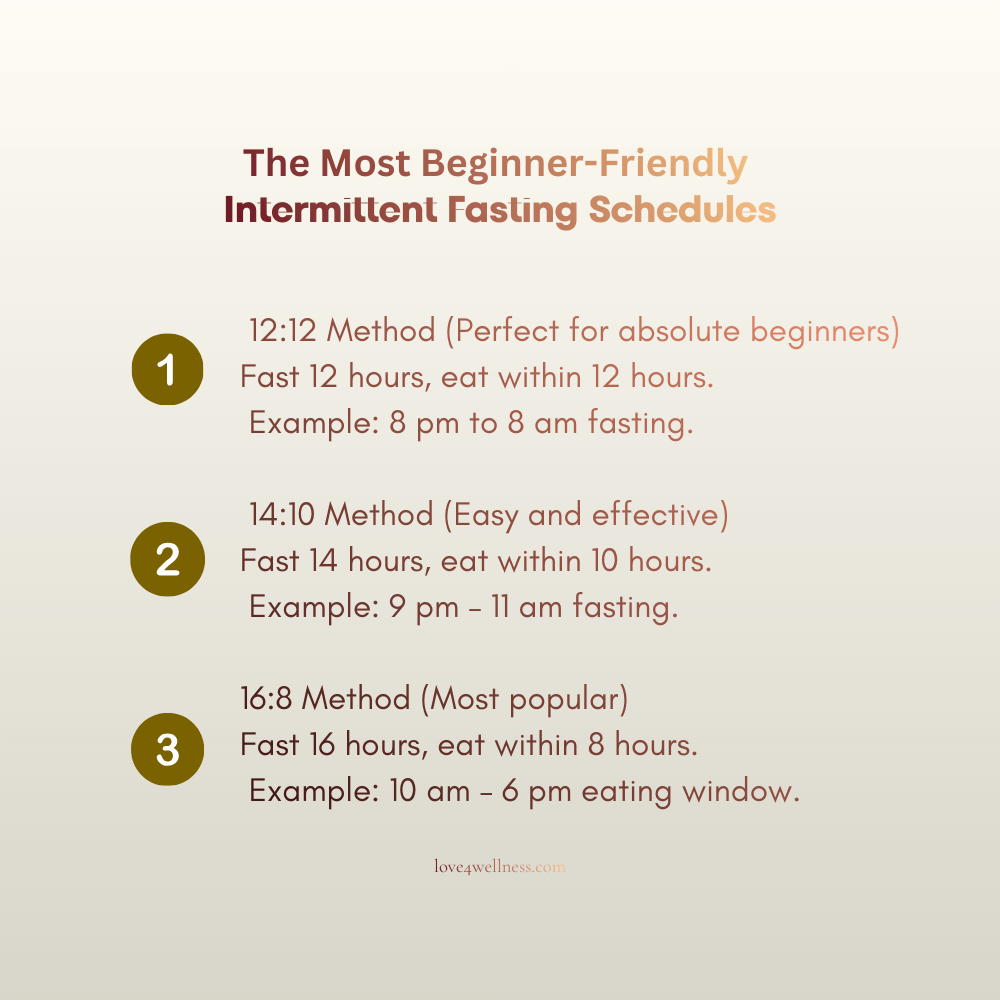
- Start with 12/12: If you finish dinner at 7 PM, don’t eat breakfast until 7 AM. Most of us do this naturally anyway!
- Build gradually: Once 12 hours feels easy, push breakfast back by 30-60 minutes every few days.
- The Goal: Eventually, you might aim for the popular “16/8” method (fasting for 16 hours, eating during an 8-hour window—e.g., noon to 8 PM), but take weeks to get there, not days.
2. Hydration is Your Best Friend 💧
During your fasting window, you aren’t eating, but you absolutely must be drinking.
Hunger pangs are often just thirst in disguise.
What’s allowed: Water (sparkling or still), black coffee, and unsweetened tea are all fine and won’t break your fast.
Pro-tip: If you feel headachey during a fast, a pinch of quality sea salt in your water can help replenish electrolytes.
3. Fuel Well, Don’t Feast 🥗
The magic of IF can be undone if your eating window turns into a free-for-all binge session.
If you spend 8 hours eating highly processed junk food, you won’t feel the benefits. When your window opens, focus on nutrient-dense foods: lean proteins, healthy fats (like avocados and nuts), and plenty of fibre-rich vegetables to keep you satiated.
4. Listen to Your Body (Safety First)
This is non-negotiable. Intermittent fasting should not feel like punishment.
- If you feel genuinely dizzy, lightheaded, or incredibly weak—eat something.
- Intermittent fasting is not for everyone. If you have a history of disordered eating, are pregnant, or have certain medical conditions like diabetes, please consult your doctor before starting.
Is Intermittent Fasting a Diet?
Intermittent fasting is not a diet.
It’s a pattern of eating that cycles between two periods:
- Fasting window: You don’t eat (but you can drink water and other no-calorie drinks).
- Eating window: You eat your regular meals.
What are the benefits of Intermittent Fasting?
- Helps lose weight and belly fat: Your body taps into stored fat for energy during the fasting window.
- Improves insulin sensitivity: Better blood sugar control, especially helpful for prediabetes.
- Reduces inflammation: Supports gut, skin, and overall metabolic health.
- Boosts cellular repair (autophagy): Helps your body remove damaged cells — often linked to anti-ageing benefits.
- Increases mental clarity: Many people feel more focused and energetic.

Also Read:
What foods can be consumed, and what should not be?
| Allowed (No calories) | Not Allowed (Breaks the fast) |
|---|---|
| ✔ Water | ✘ Milk |
| ✔ Warm water | ✘ Sugar |
| ✔ Black coffee | ✘ Fruit juice |
| ✔ Black tea / herbal tea | ✘ Coconut water |
| ✔ Green tea | ✘ Any food |
| ✔ Cinnamon/ginger/lemon-infused water (without honey or sugar) | ✘ ACV (Apple Cider Vinegar) |
| ✔ Electrolyte water without sweetness |
What to Eat in Your Eating Window (Beginner Guidelines)
You don’t need a strict diet, but to get the best results:
✔ Choose whole foods
Vegetables, fruits, whole grains, legumes, nuts, seeds, lean proteins.
✔ Add healthy proteins
Paneer, tofu, dal, beans, eggs (if applicable), curd.
✔ Add healthy fats
Ghee, nuts, seeds, olive oil.
✔ Eat complex carbs
Millets, brown rice, rotis, oats.
✔ Avoid overeating in the eating window
Eating too much will slow progress.
Beginner Tips: Preparing your Body and Common Challenges with Intermittent Fasting
Preparing Your Body
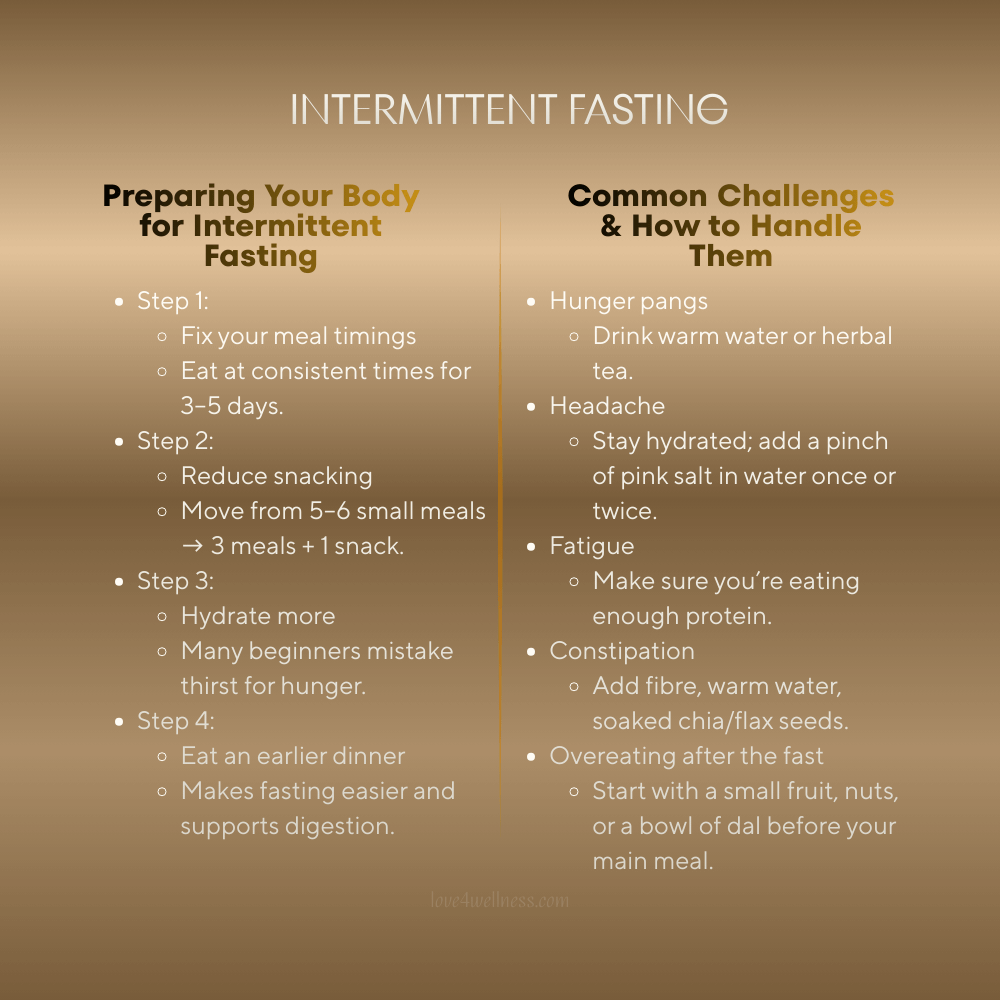
Begin by gradually reducing late-night snacking and unnecessary munching between meals, as this gently trains your body to handle longer gaps without food. You can also shift your dinner to an earlier time over a few days to help your body adjust to a longer overnight fast.
Staying well-hydrated is equally important—drink enough water throughout the day so your hunger levels and energy remain steady. It’s also helpful to tidy up your meals by including more whole foods, protein, fibre, and healthy fats while cutting back on sugary snacks or processed foods.
These small changes ease your body into fasting and make your first few days much more comfortable.
Challenges
In the first week of intermittent fasting, beginners may face a few common challenges, but most of them are temporary.
You might feel mild hunger pangs, especially during the hours you would normally snack, but these usually settle within a few days as your body adapts. Some people experience mild headaches or fatigue at first, often due to dehydration or caffeine withdrawal, which can be managed with adequate water intake.
Social situations—like family dinners or office snacks—can also make it tricky to stick to the fasting window at first. A few may also find it challenging to maintain consistent meal times or to overcome the habit of emotional eating.
The good news is that these challenges become easier once your body adjusts, and with simple strategies and patience, most beginners find a rhythm that suits their lifestyle.
Who Should Avoid Intermittent Fasting
IF is not for everyone. Avoid (or do it only with medical guidance) if you:
- Are pregnant or breastfeeding
- Have diabetes and take insulin
- Have thyroid issues with fluctuating levels
- Have a history of eating disorders
- Are underweight
- Have anaemia or nutrient deficiencies
- Have chronic acidity or digestive disorders
The Takeaway
Intermittent fasting is one of the simplest lifestyle changes you can make — no extreme diet, no expensive supplements.
The key is to be patient with yourself. Your body needs time to adapt to utilising stored energy instead of relying on a constant stream of incoming food. Start slow, listen to your body, and progress naturally.
Remember: Consistency beats intensity every time.
