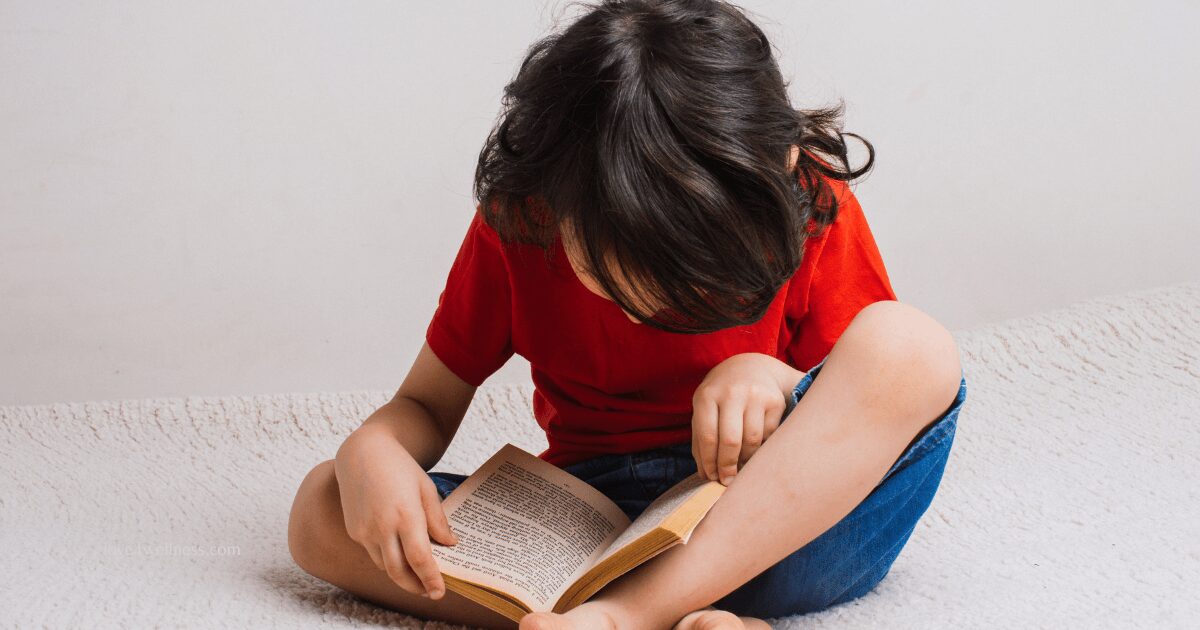
“Don’t waste time on storybooks. Focus on your studies.”
How many times have we said this—or heard it said—to children engrossed in a novel? Across India, fiction reading in is viewed as a luxury, something to enjoy only after “real work” is done. Textbooks? Essential. Reference books? Important. Fiction? Optional.
But what if we’ve got this completely wrong?
What if the very thing we dismiss as “time-wasting” is actually developing critical skills that no textbook can teach? Here’s the uncomfortable truth: fiction isn’t optional for children. It’s essential. And the cost of treating it as trivial entertainment is higher than most parents and educators realise.
What the Science Says
Decades of research reveal something remarkable: reading fiction fundamentally changes how we understand and relate to other people.
Empathy and Emotional Intelligence
When children read fiction, they’re not passively consuming words. They’re engaging in complex mental simulation, essentially “trying on” different perspectives, emotions, and experiences. Studies consistently show that fiction readers score higher on tests of empathy and theory of mind—the ability to understand that others have thoughts and feelings different from our own.
This isn’t a small skill. Empathy is foundational to nearly every social interaction—understanding why someone might be upset, predicting how our words might affect them, navigating conflicts, collaborating with people who think differently.
Fiction provides thousands of hours of practice. Every time a child wonders why a character made a particular choice, or feels sadness at a character’s loss, they’re exercising and strengthening their empathic capacity. And crucially, this transfers to real-world relationships. Children who read more fiction demonstrate greater prosocial behaviour and stronger social connections.
Books that build empathy beautifully:
Wonder by R.J. Palacio puts the reader inside the world of Auggie, a child with facial differences, navigating school for the first time. Children who read it consistently report feeling more sensitive toward classmates who are “different.” The Kite Runner by Khaled Hosseini forces older readers to sit with guilt, redemption, and loyalty—emotions that are deeply human and deeply complex. Closer to home, Swami and Friends by R.K. Narayan captures the inner world of a South Indian schoolboy so vividly that children across generations have seen themselves in Swami’s joys and fears.
Resilience Through Story
Fiction reading also builds resilience in children in ways we often overlook.
Stories follow a pattern: challenge, struggle, growth, resolution. Characters face adversity and find ways through it—or fail, and children learn from those failures too. This narrative structure provides a crucial framework, teaching that:
- Difficult situations don’t last forever
- Struggle is normal, not personal failure
- People can grow and change
- Meaning can be found even in suffering
In an age of unprecedented childhood anxiety, this matters enormously. Fiction doesn’t shield children from life’s difficulties—it prepares them to face those difficulties with greater resourcefulness and hope.
Books that teach resilience:
Hatchet by Gary Paulsen—a thirteen-year-old stranded alone in the Canadian wilderness with nothing but a hatchet—is essentially a masterclass in resourcefulness and not giving up. For younger children, Matilda by Roald Dahl shows a child in genuinely difficult circumstances finding her own power, her own escape, her own way forward. And The Diary of a Young Girl by Anne Frank, read at the appropriate age, teaches children that even in unimaginable circumstances, human beings find ways to hope, laugh, and connect.
Language and Thinking Skills
Fiction exposes children to far richer language than everyday conversation or textbooks. They meet words in context, learn nuanced meanings, and understand how language creates mood and meaning.
But it goes deeper. Fiction is fundamentally about problems—characters wanting something and obstacles standing in their way. Unlike maths problems with single correct answers, fictional problems are messy and ambiguous, much like real life.
When children engage with these narratives, they develop crucial cognitive flexibility. They learn that most problems don’t have obvious solutions, that different people interpret situations differently, and that actions have ripple effects. These are the thinking skills that actually determine success in adult life.
Books that stretch thinking:
To Kill a Mockingbird by Harper Lee asks children to grapple with justice, prejudice, and moral courage in ways no textbook ever could. The Giver by Lois Lowry presents a society that has eliminated pain—and asks the reader: at what cost? Even something as seemingly simple as Charlotte’s Web by E.B. White teaches young children about loyalty, mortality, the power of words, and the complexity of friendship. These aren’t just stories. They’re thinking exercises in disguise.
Also Read:
- We Push Marks, Not Health — And That’s Why Students Are Burning Out
- Rethinking Discipline for Students: From Control to Self-Management
- All You Need to Know About Exam Stress in Teens: How Students Can Navigate It and What Parents Can Do About It
The Indian Context: Why We’re Fiction-Deprived
In India, the devaluation of fiction isn’t just individual preference—it’s cultural.
Exam-oriented education means anything not directly tested feels frivolous. Between school, tuition, and homework, children have little free time. For families where education is a path to economic security, investing time in something that doesn’t directly lead to marks feels reckless. Rest and pleasure are viewed with suspicion.
The result? Indian children often grow up reading almost no fiction beyond what’s assigned in school. And school-assigned fiction is usually taught so poorly—analysed to death, divorced from pleasure—that it kills rather than cultivates love of reading.
India has a rich literary tradition that many children never encounter—Malgudi Days, The Blue Umbrella, The God of Small Things, and Ruskin Bond’s countless tender stories of childhood in the hills. When we dismiss fiction, we’re also severing children from their own cultural imagination.
What We Lose
Without fiction’s rich internal worlds, children have fewer resources for introspection and imagination. They struggle to name and understand their own emotions, lacking the vocabulary to articulate what they feel. They show measurably lower ability to understand others’ perspectives.
The social rehearsal that fiction provides—seeing how conflicts are navigated, how trust is built, how communication succeeds and fails—is absent. They enter relationships with less practice. They’re more likely to see the world in simplistic terms: good people and bad people, right answers and wrong answers, missing the complexity that fiction reveals. Real life is rarely black and white—it’s made up mostly of grey. A child who grows up without fiction often enters adulthood perplexed by this grey, unprepared for its complexity. Not everything can be taught by a parent. Hand-holding has an expiry date. Fiction quietly does what no lesson plan can: it helps a child evolve into an adult who can navigate the messy, uncertain, beautifully complex world waiting for them.
Making It Happen
For parents and educators convinced of fiction’s importance, here’s how to prioritise it:
Stop treating fiction as a reward. “Finish your homework, then you can read” positions fiction as lesser. Instead: “You need both study time and reading time.”
Model reading. Children who see adults reading for pleasure become readers themselves. Let them catch you lost in a novel.
Protect reading time. In the same way you protect study time, protect 20 minutes of daily reading.
Let them choose. Children forced to read books they hate develop hatred for reading. Comics, graphic novels, fantasy—whatever captures their interest. Trust that wide reading naturally leads to deeper reading. A child obsessed with Diary of a Wimpy Kid is a child who loves reading. That’s the foundation everything else is built on.
For educators: Build classroom libraries. Provide DEAR time (Drop Everything And Read). Don’t kill books with over-analysis. Validate diverse reading choices. Share your own reading.
A Different Measure of Success
We need to fundamentally rethink how we measure educational success.
Yes, children need maths, science and history. But they also need to develop into emotionally intelligent, empathetic, resilient humans who can navigate complex social worlds, understand themselves and others, and communicate effectively.
Reading fiction develops exactly these capacities in children. It’s not a luxury—it’s essential.
The most successful adults aren’t those who memorised the most facts in childhood. They’re those who can think flexibly, understand people, manage emotions, and solve complex problems. All skills that fiction quietly, powerfully develops.
So the next time you see a child absorbed in a novel, resist the urge to redirect them to something “more productive.” What they’re doing is productive. They’re not escaping life—they’re preparing for it.
The report card measures only a fraction of what matters. Fiction develops the rest. And in the long run, that “rest” might matter more than the marks ever did.
What role does fiction play in your child’s life?
